
Sea Island and the Leadership Lessons of the 2004 G8 Summit
A leadership reflection from the site of the 2004 G8 Summit, where world leaders gathered to confront crisis and conflict in an ever increasingly dangerous and uncertain world.
By Terry Waldrop
June 14, 2026
I returned from Sea Island, Georgia, on June 14, 2026, after visiting the historic site of the 2004 G8 Summit and studying the leadership lessons connected to that event.
During the trip, I had the opportunity to sit in the conference room where the 2004 G8 Summit was held. I also sat in President George W. Bush’s chair, which was labeled with his name.
That will get your attention.
It is one thing to read about history. It is another thing to sit in the room where world leaders gathered and realize that decisions discussed in that space affected people across the globe.
In June 2004, President Bush hosted the 30th G8 Summit at Sea Island, bringing together leaders from the United States, Great Britain, Canada, France, Germany, Italy, Japan, Russia, and the European Union. For a few days, this peaceful stretch of the Georgia coast became the meeting place for some of the most powerful people on earth.
And they were not there for a vacation.
They were dealing with a world that was tense, dangerous, and uncertain. The attacks of September 11 were still fresh. The wars in Afghanistan and Iraq were front and center. Terrorism, weapons proliferation, global economic stability, energy concerns, poverty, disease, African development, and democratic reform in the Middle East were all part of the conversation.
In other words, this was not a ribbon-cutting ceremony.
This was leadership under pressure.
That is what makes Sea Island such an interesting case study. The setting was calm. The issues were anything but.
Big Problems Require the Right People at the Table
One of the first leadership lessons from Sea Island is simple: serious problems require serious people in the room.
No one country could solve terrorism alone. No one leader could stabilize the world economy alone. No one government could handle poverty, disease, war, energy, and security without help from others.
That is true in world affairs, and it is true in business, athletics, healthcare, education, and community leadership.
Too many leaders try to solve complex problems in isolation. They sit in their office, close the door, and convince themselves they are being decisive. Sometimes they are. Sometimes they are just talking to themselves with better furniture.
Real leadership means knowing when to gather the right people, even when those people do not always agree with you.
Especially then.
Relationships Matter Before the Crisis
Summits like the one at Sea Island are not just about speeches and official statements. A lot of the real work happens in private conversations, informal meetings, meals, walks, and side discussions.
That matters.
Leaders who wait until the crisis to build relationships are already behind. Trust is not microwaved. It is slow-cooked.
Whether you are running a hospital, coaching a team, managing a business, or leading a school system, relationships built before the storm often determine how people respond during the storm.
When trust already exists, people will tell you the truth faster. They will move quicker. They will give the benefit of the doubt. They will stay in the fight longer.
Without trust, every hard conversation becomes a negotiation.
Leadership Is Not Always About Control
At Sea Island, President Bush may have been the host, but he was not the boss of the other world leaders.
That is an important point.
There was no organizational chart where one leader could simply order everyone else to fall in line. Progress required influence, persuasion, patience, and relationship capital.
That is where many leaders struggle.
Authority can make people comply. Influence makes people commit.
There is a big difference.
The higher you go in leadership, the more you learn that titles are useful, but they are not enough. You can have the office, the nameplate, the parking spot, and the authority, and still not have people truly following you.
Leadership is not just getting people to attend the meeting.
Leadership is getting them to buy into the mission.
Leaders Must Handle Today Without Forgetting Tomorrow
The 2004 G8 Summit dealt with immediate problems: terrorism, Iraq, Afghanistan, global security, and economic uncertainty.
But the leaders also discussed long-term issues: poverty, health initiatives, debt relief, African development, trade, and democratic reform.
That is the leadership challenge.
You have to put out today’s fire without burning down tomorrow’s opportunity.
Most leaders tend to lean one way or the other. Some are crisis managers. They live in the daily fight. They are tough, responsive, and usually exhausted. Others are vision people. They love strategy, planning, and big ideas, but sometimes miss the problem sitting three feet in front of them.
The best leaders do both.
They manage the urgent while still building toward the important.
That is not easy. But leadership was never supposed to be easy. If it were, everybody with a polo shirt and a clipboard would be great at it.
Setting Matters
Sea Island was not chosen by accident.
The location sent a message. It was secure, private, calm, and removed from the noise. That kind of environment can change the tone of a meeting.
Sitting in that conference room made that lesson very real to me.
Where you meet matters. How you set the room matters. The tone you create matters. The culture around the conversation matters.
A bad environment can make smart people defensive. A good environment can help hard conversations become productive.
That applies to boardrooms, locker rooms, classrooms, hospitals, and family businesses.
Sometimes leadership is not just what you say. It is the atmosphere you create before you say it.
The Lesson From Sea Island
More than twenty years later, most people do not remember every agreement or statement that came out of the 2004 G8 Summit.
But the leadership lessons still hold up.
Bring the right people together.
Build trust before you need it.
Balance crisis management with long-term vision.
Understand that influence is stronger than authority.
Create an environment where difficult conversations can actually happen.
Sea Island is known for beauty, tradition, and hospitality. But for a few days in 2004, it also became a reminder that leadership is often tested most when the stakes are high, the answers are unclear, and everyone in the room brings their own pressures, politics, and priorities.
That is real leadership.
Not clean. Not easy. Not scripted.
But necessary.
And whether you are leading a nation, a business, a hospital, an athletic department, a classroom, or a family, the principle is the same:
Get the right people in the room, tell the truth, build trust, and keep your eyes on the mission.
Everything else is just noise.
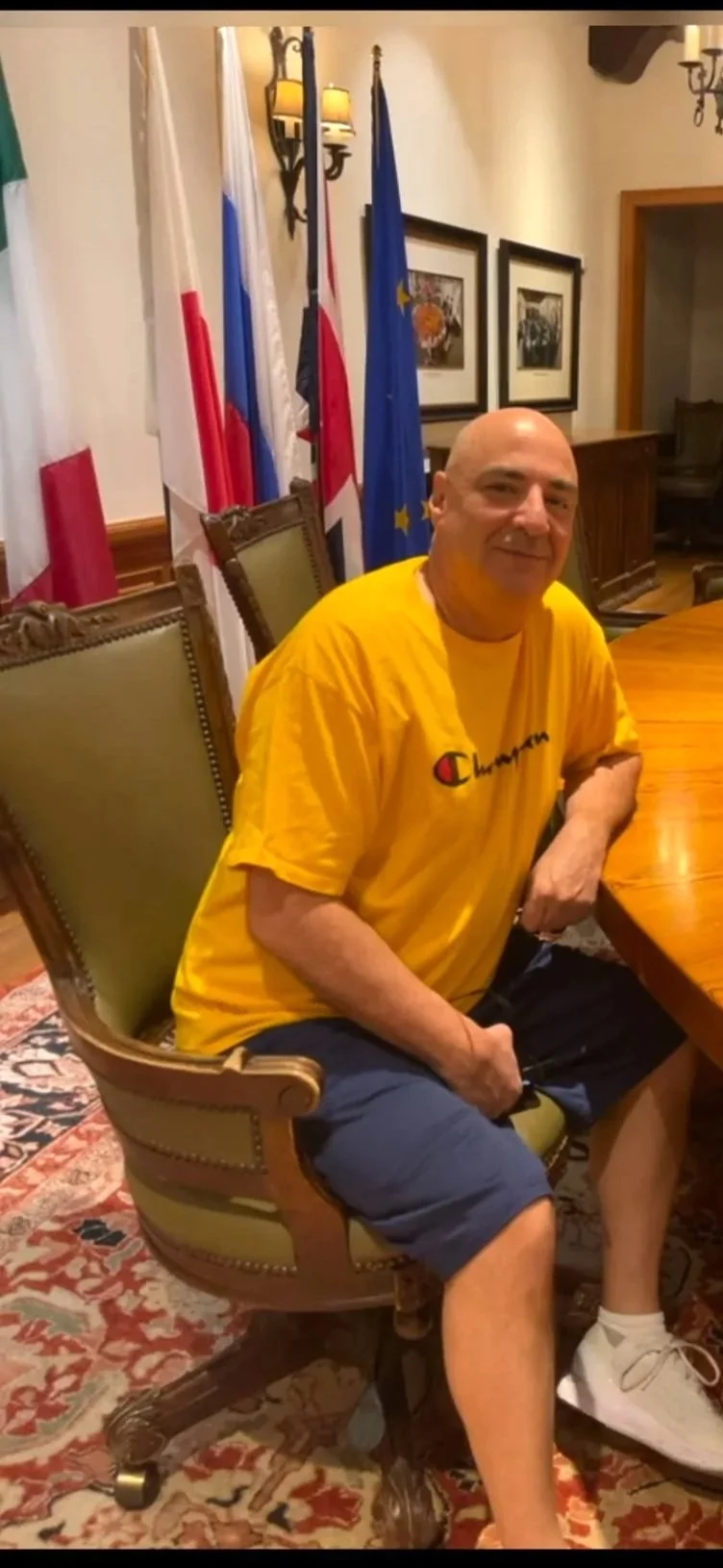
Sitting in President George W. Bush’s chair inside the Sea Island conference room used during the 2004 G8 Summit